
We have heard the community’s concerns about the planned use of glyphosate, and we share them. We live here too, and we care deeply about this place.
To be clear, herbicides should only be used as a last resort; all other reforestation tools should be used first. Even then, they must be used with extreme caution, in minimal quantities, not prior to precipitation events, well clear of all waterways, and with robust scientific monitoring and public notice. Tahoe is a special place, and it deserves special protection.
As a science-based organization, we rely on facts to find solutions that protect the Lake Tahoe Basin’s water quality, environmental health, and community wellbeing. We demanded that the US Forest Service (USFS) provide more information about the proposed use of glyphosate in Tahoe as part of its Caldor Fire Restoration Project.
In June, USFS posted an FAQ document online that provides more details about the agency’s plans for scientific monitoring, mitigations to protect the environment and community, and its process for notifying the public before any herbicides are used. These details show that USFS is planning to be cautious and restrained with any use of herbicide to help burned areas in the Basin return as healthy, wildfire-resilient forests. The FAQ also confirms that there is no proposed use of herbicide as part of the reforestation project in the Tahoe Basin prior to 2028.
Yet, a plan is still just a plan until it’s implemented. So, we will continue to be Tahoe’s watchdog, just like we do with any project that could impact the Basin. We’ll ensure that any herbicide use for this project is carefully managed to protect Tahoe’s water, wildlife, and community. And we’ll work to help a healthy, resilient forest grow back.
Right now, we’re collaborating with agency partners to sample and test water quality for any presence of glyphosate. We will continue that scientific monitoring to ensure herbicide use does not impact Tahoe’s water.
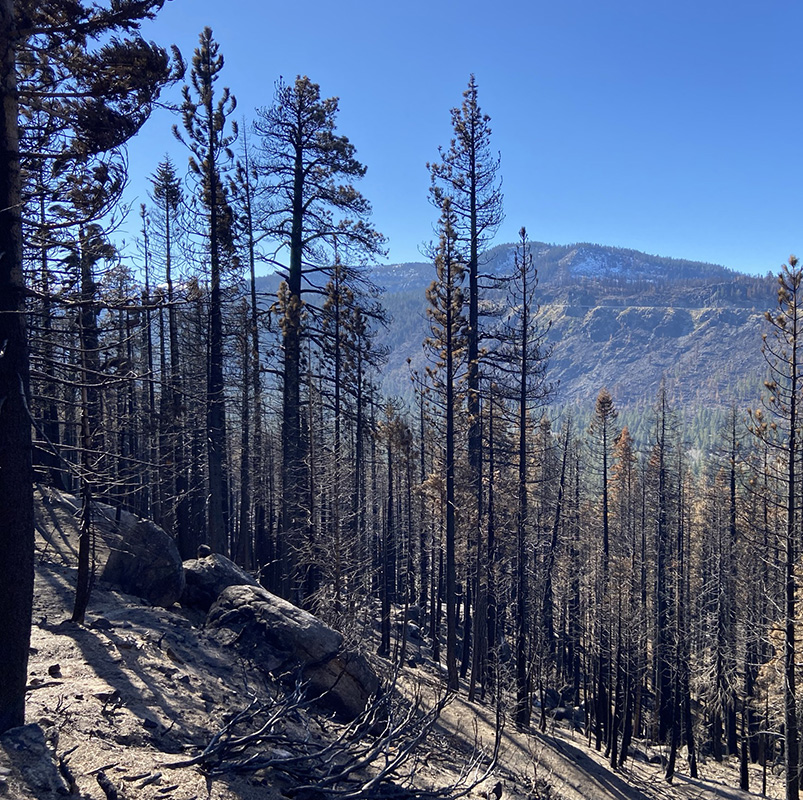
This continues our scientific work on the Caldor Fire’s impacts to Tahoe. When the fire was still burning in 2021, we commissioned a scientific study on the water quality effects from wildfire smoke and ash. That has spurred further wildfire research, which we also support. We tested and monitored streams for wildfire impacts and the presence of chemicals from fire retardant. In addition, we funded a study to evaluate which pre-fire fuel reduction treatments worked best to protect Tahoe during the Caldor Fire.
This fact-first approach guides our Science to Solutions method for protecting Lake Tahoe. We will continue to serve as Tahoe’s watchdog and keep the community informed.