

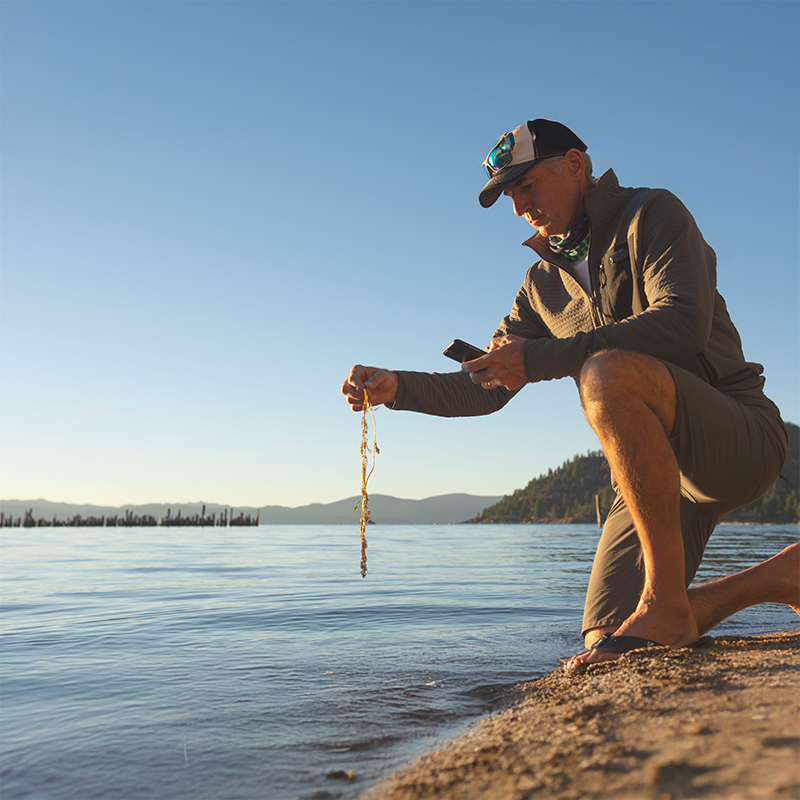
What if one of the biggest threats to Lake Tahoe’s health arrived on a paddleboard, fishing net, or damp life jacket?
That is not hypothetical. It is how aquatic invasive species spread. Some, like Eurasian watermilfoil and curlyleaf pondweed, are already established in parts of Lake Tahoe. Others, especially golden mussels, are the looming threat that could change the Lake in ways people would notice fast. Can you imagine if Tahoe’s blue water turned green?
Golden mussels are spreading in California and can survive more than a week out of water. They are nearly impossible to remove once established, so prevention is the only option to preserve the Lake.
The good news is that this is one of those moments when small actions from people like you can make a very important difference. It starts with a simple recipe:
– Clean your gear by removing any plant material, mud, or debris from boats, kayaks/SUP, inflatables, water shoes, and fishing gear.
– Drain all water, open and drain compartments, ballast tanks, and coolers.
– Dry completely. Aquatic Invasive Species like golden mussels can survive more than a week out of water. Make sure everything is fully dry before launching.
Keep Tahoe Blue has built a connected set of aquatic invasive species programs that make it easier for Tahoe-lovers, paddlers, anglers, and beachgoers to help protect the Lake. And there’s a simple recipe for how
Why aquatic invasive species matter now
 Aquatic invasive species do not stay in one marina or one stretch of shoreline. Once they take hold, they can spread quickly, crowd out native species, alter habitat, and damage water quality. Aquatic invasive plants have already infested the shallow lagoons in the Tahoe Keys.
Golden mussels raise the stakes even higher because they can survive in a wider area of the Lake, where they threaten water quality, recreation, infrastructure, and the iconic blue water people come here for.
Motorized boats are not the only way golden mussels and other invasive species can be transported. Paddleboards, kayaks, floaties, fishing gear, wetsuits, and even water shoes can carry aquatic hitchhikers between waterways if they are not cleaned before the next outing.
That is why Clean, Drain, Dry matters every time gear touches the water.
Electric boat maker Arc Boats underscored that point in its Earth Day feature with Keep Tahoe Blue’s Chief Strategy Officer, Jesse Patterson, highlighting how prevention works best when people understand that Lake Tahoe’s health is a shared responsibility.
Tahoe’s first line of defense is more than a program of mandatory boat inspections. It’s up to all of us.
Eyes on the Lake turns awareness into early detection
Eyes on the Lake is Keep Tahoe Blue’s citizen science program focused on giving people the knowledge to spot and report aquatic invasive species before they spread. It gives Tahoe water users a practical role in protecting the places they already paddle, swim, boat, and explore. The program works because Lake Tahoe is too large for a small number of specialists to monitor alone, but full of people who are already out on the water and along the shoreline. With the right training, everyone can help catch problems early and strengthen the Basin’s early warning system.
That includes reports of invasive plants but also reports of absence. Knowing where species are not found helps build a clearer picture of where risks are changing and where prevention is working.
Keep Tahoe Blue also works with marina staff, businesses, and agency partners to strengthen early detection, but the public side of Eyes on the Lake is what makes the program especially powerful. It puts science and environmental protection in the hands of the people who know and love Tahoe best.
If you want to get started, Eyes on the Lake trainings are where to do it. Check out Keep Tahoe Blue’s event calendar to find the next session.
See Something? Report It
 One reason these programs work is that reporting is simple and quick.
Through the Citizen Science Tahoe web app, anyone can submit what they see while enjoying the Basin, including invasive species, algae, cloudy water, and litter. Those reports are reviewed by Keep Tahoe Blue experts, mapped, and shared with agency partners to help track infestations and prioritize action.
That means a quick observation from a paddler, beachgoer, or angler can become useful information for the people protecting the Lake.
This is one of the clearest ways Keep Tahoe Blue makes science accessible. You do not need to be a biologist to contribute to Tahoe’s protection. All you need is a phone, a few minutes, and you’re on the way to making a difference for the Lake.
The Outreach Team brings prevention to the shoreline
For people who want a more active volunteer role, our Eyes on the Lake Outreach Team is one of the most direct ways to help.
The Outreach Team program trains volunteers to talk with beachgoers, paddlers, anglers, and other shoreline users about golden mussels, aquatic invasive species, and the Clean, Drain, Dry protocol. It brings education to where it matters most: beaches, launch areas, marinas, and summer access points where gear moves in and out of the water all day.
People need to understand what is at stake and what to do next. The Outreach Team helps turn that knowledge into practical action.
Tahoe Keepers and Chance to Win make it easier to join in
 Keep Tahoe Blue has partnered with Tahoe Keepers to make invasive species prevention easier to understand and rewarding to do. The core message is simple and worth repeating: Clean, Drain, Dry your watercraft and gear every time. Tahoe has successfully kept quagga and zebra mussels out since 2008 through strong policies, inspections, and public participation. That is the standard to build on now.
The Eyes on the Lake x Tahoe Keepers Chance to Win contest adds one more reason to get involved. People can enter by registering as a Tahoe Keeper and by submitting Eyes on the Lake reports through September 30, and eligible participants can earn multiple entries each month.
It is easy, free to enter, and built to reward the responsible stewardship Tahoe needs.
Your checklist to protect Tahoe this summer
As more paddlers, anglers, beachgoers, and boaters head out this summer, the window for prevention is now. This is when habits matter most, because more gear moves between waterways and more people have a chance to stop invasive species before they spread.
If you want to help protect Lake Tahoe this summer:
- Remember to Clean, Drain, and Dry your gear before moving between waterbodies.
- Join an Eyes on the Lake training to learn how to spot and report aquatic invasive species, and understand the risks to Tahoe.
- Volunteer with the Eyes on the Lake Outreach Team to help educate paddlers, anglers, and beachgoers about invasive species prevention and how important it is to Clean, Drain, Dry.
- Use the Citizen Science Tahoe web app to report what you see around the Basin, from invasive species to algae and cloudy water.
- Enter our Chance to Win contest through September 30 to get your hands on free gear while helping protect the Lake.
- Watch our video with electric boat maker ARC Boats for a closer look at what Lake protection looks like on the water.
This is what real Tahoe stewardship looks like: paying attention, acting early, and making prevention part of how we enjoy the Lake.