

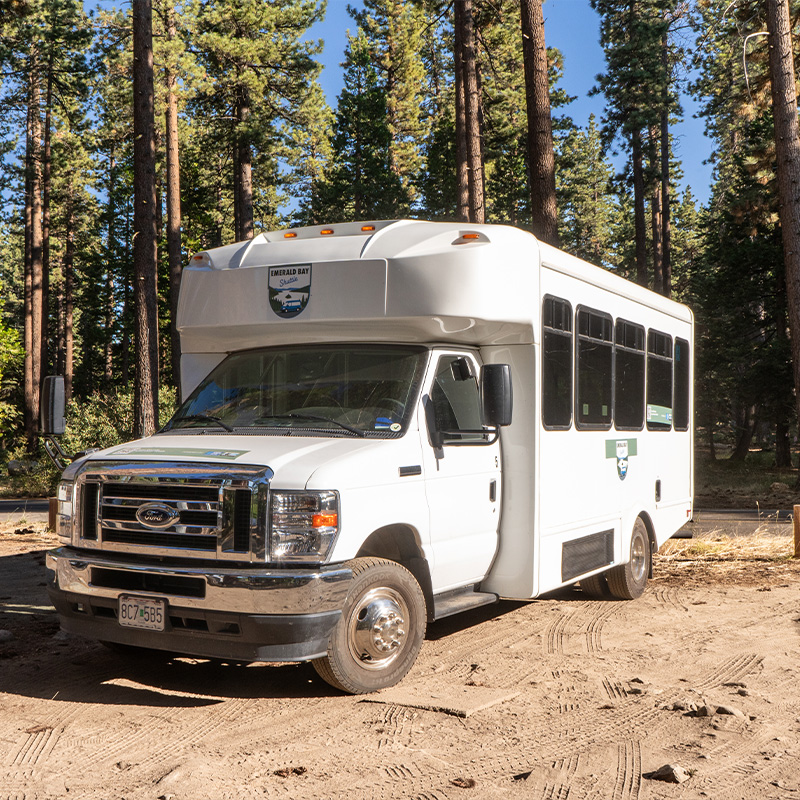
When people picture a summer day at Emerald Bay, they usually picture blue water, green trees, and the view of Fannette Island. What they do not picture is the line of cars.
Emerald Bay is one of Tahoe’s most iconic places, and one of its most crowded summer highway corridors, with 1.8 million passing through it. Parking is limited on the narrow stretch of Highway 89, and during the busiest summer months, demand can overwhelm the corridor quickly. The result is familiar: backups, unsafe roadside stopping, and a visitor experience that can feel at odds with the beauty of its surroundings.
That is why the return of the Emerald Bay Shuttle matters. But the bigger story is not just that the shuttle is back for a second year. It is that the service came back at all.
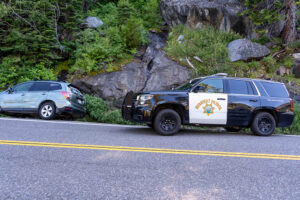
CHP citing illegally parked vehicles on Highway 89 in Emerald Bay.
Why Emerald Bay Needs a Better Transportation Solution
Emerald Bay has never been a place where adding more parking would solve the problem.
The constraints are real. This corridor is physically limited, heavily visited, environmentally sensitive, and fraught with public safety concerns. Traffic here is not just an inconvenience. It carries real consequences for the Lake and for the people trying to enjoy it. Vehicle traffic brings emissions, road dust, runoff, erosion, and dangerous roadside behavior in a place with very little room for error.
That is why transportation in Tahoe cannot be treated separately from environmental protection. In places like Emerald Bay, it is part of it.
Keep Tahoe Blue has been making that case for years. The goal is not simply to provide an easier way to reach a popular destination; it is to reduce the impacts of car dependence in one of Tahoe’s most sensitive and heavily used areas. That same logic sits at the heart of Keep Tahoe Blue’s broader transportation work: Tahoe’s car dependence harms the Lake’s water clarity, and better options need to be easier to use and easier to trust.
The Collaboration Behind the Emerald Bay Shuttle
From the outside, a shuttle can look simple. Put a vehicle on a route, add stops, and go. Anyone who has worked on something like this knows it’s not that easy.
Behind a service that feels seamless to the public are years of coordination, approvals, safety planning, staffing, logistics, and operational problem-solving. In Emerald Bay, that meant involvement from partners including California Highway Patrol, Caltrans, Tahoe Transportation District, El Dorado County, state agencies, and other public safety and jurisdictional stakeholders. No single organization could do it alone.
That collaboration is one of the most important parts of the Emerald Bay Shuttle story — and one of the least visible. Keep Tahoe Blue helped make the shuttle possible by coordinating the shuttle provider, providing critical funding, keeping environmental needs in focus, helping shape public communication, and supporting the long-term framing needed to move the project from pilot to — what will hopefully become — a fixture of Tahoe’s transportation mix.
A public-facing service should feel simple for the rider, even though it is complex behind the scenes. That is the real work.
Why Year Two Matters for the Emerald Bay Shuttle
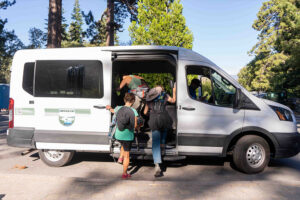
Emerald Bay shuttle riders catch a ride.
Before year one, the question was not performance. It was whether a shuttle in Emerald Bay was even logistically possible.
Could it run safely in one of Tahoe’s most constrained summer corridors? Could it relieve pressure in a place where the old pattern was clearly not working well enough?
Those were the right questions for a pilot year. And while ridership matters, the most important year-one outcome was proof of concept. The pilot showed that the shuttle could operate and that there were realistic alternatives to driving into Emerald Bay. It also helped support related changes in the corridor, including the seasonal removal of 50 illegal roadside parking spaces, a sign that the system was beginning to shift.
That is why year two matters so much.
Car-free options only work when people can plan around them, and when the rest of the corridor begins to function around them too. People do not change their behavior for one summer. They change it when a service returns, runs long enough to matter, and supports broader improvements such as reducing unsafe roadside parking and making it easier to move between parking areas, trailheads, and transit stops. This year’s earlier start, longer run, and stronger continuity all matter for that reason.
The Details
While a few aspects are still being worked out, the Emerald Bay Shuttle is planned to operate this summer with these features.
Stops at the South Lake Tahoe “Y” Transit Center, Camp Richardson, Inspiration Point/Bayview Trailhead, Eagle Falls Trailhead, and Sugar Pine Point State Park on two routes.
Operating mid-June through Labor Day. Tickets can be booked in advance online, just like last summer, but this year, you can also hop on if there is room. Shuttles will run seven days a week, with earlier service and more vehicles operating Friday through Sunday.
Fares remain the same price as last year: for adults, round-trip rides are $10, and one-way trips are $5. For children, seniors, people with disabilities, and Medicare cardholders, round-trip rides are $5, and one-way trips are $2.50.
Shuttles can accommodate bikes, recreation gear for your day trip, service animals, and are ADA accessible.
Part of a Bigger Car-Free, Care-Free Tahoe
The Emerald Bay Shuttle matters on its own. But it matters even more as part of something larger.
Keep Tahoe Blue’s vision for a Car-Free, Care-Free Tahoe is not about one service. It is about building a system people can actually use.
A Car-Free, Care-Free Tahoe means parking your car once and getting wherever you want to go in Tahoe without it.
That means making Tahoe’s transportation options easier to understand, trust, and use together. The Emerald Bay Shuttle is one piece of the alternative transportation solutions big picture, alongside Lake Link, local bus service, e-scooters, bikes, and walking options. It helps make a bigger transportation vision both more visible and the easy choice.
A Better Way to Reach Emerald Bay
For a visitor, this can be as simple as parking once on the South Shore, west shore, or north shore and using existing transit, microtransit, or biking to catch the shuttle to Emerald Bay without dealing with the most stressful part of the trip: getting a car into the Highway 89 corridor and finding a place to park.
That is the practical value. There is also a human one. Let someone else do the driving so you can embrace the Tahoe pace, slow down, and look out the window to enjoy your beautiful surroundings. The Lake-friendly transportation option can also be the more enjoyable one.
That is part of what makes this more than a transit story — it’s also a visitor experience story.
Plan Your Summer Trip on the Emerald Bay Shuttle
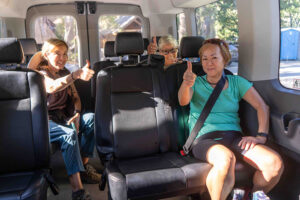
Happy riders on the Emerald Bay Shuttle.
The return of the Emerald Bay Shuttle matters because it signals progress.
It shows that a difficult corridor can be managed differently over time. It shows that long-term coordination can produce something the public can actually use. And it shows how Tahoe gets closer to a future where people can depend on better options instead of reacting to the same summer traffic problems year after year.
If Emerald Bay is on your list this summer, plan ahead. Check the schedule, book your rides on the Emerald Bay Shuttle, and explore car-free transportation options that can help you leave your car parked longer.
Because the goal isn’t just moving people differently. It’s protecting Emerald Bay by making the right choice the easy one.
Here’s what you can do:
- Ride the Emerald Bay Shuttle
- Use car-free transportation options
- Follow us and share the ways you can make a difference