Protecting Lake Tahoe takes all of us. This year, thousands of donors, volunteers, and Tahoe-lovers worked with our team of experts to power a long list of accomplishments, from groundbreaking research on microplastics in clothes and tires, to the opening of our new Spurlock/Evers Environment & Education Center. Thank you for making it all possible. We’ve set our goals for 2026 even higher as we embark on the second year of our Five-Year Strategic Plan.
We invite you to support Keep Tahoe Blue during this season of giving. Here are a few notices regarding year-end gifts. -
Online donations will be recognized on the date of the transaction.
- Check donations post-marked on or before December 31, 2025, will be counted as 2025 donations.
-
Stock and wire gifts are warmly welcomed. For instructions, please contact melissa@keeptahoeblue.org.
- Our team is on holiday from December 24 to January 4. We will promptly process all year-end giving acknowledgements once we return.
|
|
|
Our commitment: Protect Tahoe from aquatic invasive species |
|
|
Launched the Aquatic Invasive Species Defense Team |
Invasive golden mussels were first detected in California in 2024 and have since spread to dozens of water bodies from Stockton to Los Angeles, clogging pipes and threatening water quality. To keep them out of Lake Tahoe, we created a volunteer program to educate paddlers, swimmers, and beachgoers about the impact golden mussels could have on the Lake and what they can do to stop them from reaching Tahoe. Our Aquatic Invasive Species Defense Team engaged and educated more than 900 people this summer, and golden mussels have been kept out of the Lake.
|
Completed final report for the Tahoe Keys Control Methods Test and started planning for the long term |
The Tahoe Keys are ground zero for the infestation of invasive weeds at Tahoe. A three-year, science-based test evaluated all the tools available to control these problem plants in the Keys, so they can’t spread further into the Lake. After a decade of our involvement, in 2025, we helped push forward a final report on the test’s results, which synthesized hundreds of thousands of data points and went through peer review by Tahoe’s leading scientists. Using the report, we are kicking off a process with our partners to design a long-term plan to manage and control aquatic invasive weeds.
|
| Contain invasive weeds in the Tahoe Keys |
We will implement a “super containment” project to keep invasive weeds from spreading out of the Tahoe Keys and into Lake Tahoe while a long-term control plan is being developed. The project will include bubble curtains, weed-eating aquatic robots, and ongoing efficacy monitoring of the technology being used. |
Develop an Eyes on the Lake training for industry professionals |
Our Eyes on the Lake volunteer program has trained more than 950 people to identify and report invasive species, so we can keep them from spreading. We will bring more businesses onto the team by creating a training program tailored for marina and water-based industry professionals, including contractors, recreation businesses, entertainment companies, and divers. |
|
|
Our commitment: Make the Tahoe Basin a global
model for climate change adaptability |
|
|
Advocated for science-based updates to Tahoe’s environmental goals |
Our team publicly and privately pushed the Tahoe Regional Planning Agency (TRPA) to update the Basin’s environmental thresholds using the best available science. The thresholds function as management benchmarks, yet most of them have not been touched in decades. As a result of our work, the agency committed to update these thresholds within three years, ramp up enforcement of their existing environmental rules, and re-center environmental protection as the goal of all regulations.
|
Advanced projects to reconnect and restore Tahoe’s largest natural water filter |
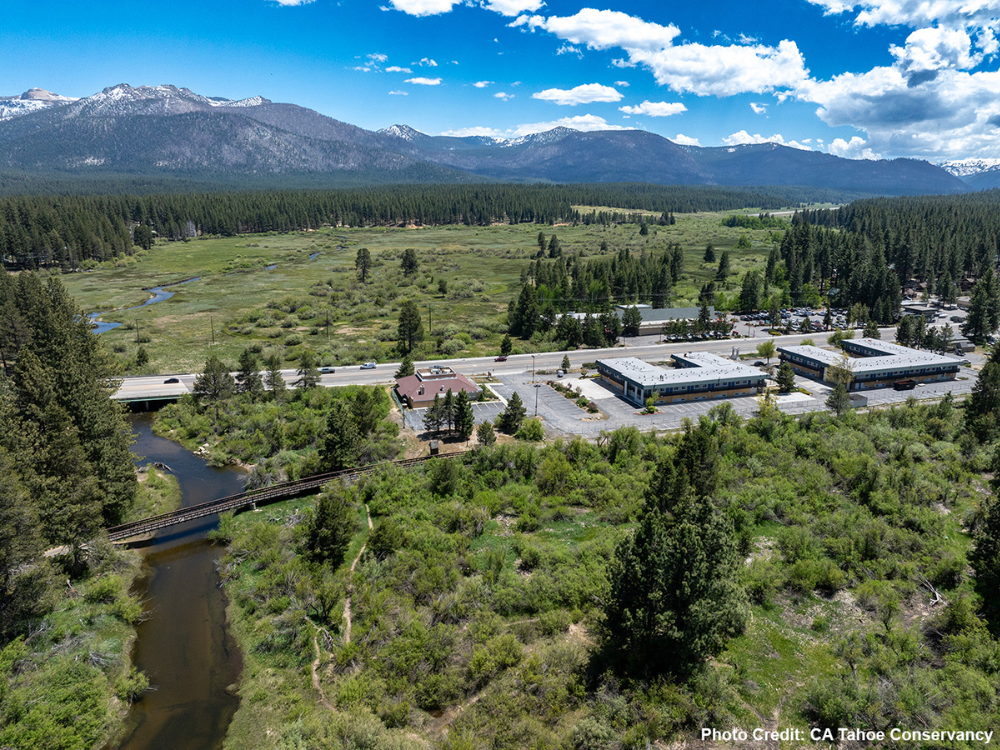
With help from our team of government affairs and planning experts, 240 acres along the Upper Truckee River corridor are closer to being restored to their natural marsh, meadow, and riparian habitat. The former Motel 6 property in South Lake Tahoe was fully demolished, and the neighboring Johnson Meadow site was approved for full project funding from the California Wildlife Conservation Board after years of our consistent and vocal advocacy to decision makers in Sacramento.
|
| Begin restoration of the Upper Truckee River watershed |
Next year will bring even more progress for the Upper Truckee Marsh South Project (at the former Motel 6 site) as restoration and recreation access planning come together into a final vision. At the same time, on-the-ground work will begin just upstream at Johnson Meadow. The Keep Tahoe Blue team will provide financial support and a strong voice for restoring the river corridor to keep the two projects moving ahead.
|
Share 25 years of citizen scientist water quality testing data |
Since 2000, Keep Tahoe Blue volunteers and partners have collected and tested water quality samples from over 30 sites across the southern Truckee River Watershed each spring. In 2026, our natural resources team will compile their work into a long-term report revealing trends and changes over time and share it as a model for other community-led environmental protection efforts across the country and world. |
|
|
Conservation Across Borders |
|
|
Our commitment: Protect Tahoe from threats beyond the Basin |
|
|
Reduced the scale and environmental impacts from the Village at Palisades Tahoe development plan |
We negotiated a settlement agreement with Alterra, Palisades Tahoe's parent company, and our conservation partners at Sierra Watch to reduce the scale of the development plans for Palisades Tahoe and its negative environmental impacts by approximately 40%, while maintaining nearly all the community benefits promised under the former full-sized plan. |
Opened our new Spurlock/Evers Environment & Education Center to the public |
This summer, we were thrilled to open the doors of Keep Tahoe Blue's new home and the region's hub for environmental education and action. Hundreds of residents and visitors explored interactive environmental exhibits and chatted with our staff each month during weekly open hours and at a series of educational events. They came away with a better understanding of Tahoe's challenges and how they can be part of the solution.
|
| Create educational experiences for students and the public |
We will utilize the Spurlock/Evers Environment & Education Center as the Basin's home base for place-based environmental education curriculum and presentations. Our staff will host educational field trips for students and speaker series events for locals and visitors throughout the year. The Center will also host partner organizations and businesses to improve collaboration between the public and private sectors.
|
Convene conservation experts in Tahoe |
Keep Tahoe Blue will host members of the California Landscape Stewardship Network and their international partners for the group's 10-year anniversary meeting. Our CEO, Dr. Darcie Goodman Collins, has helped lead this unique "network of conservation networks" which has made significant progress in exchanging conservation lessons around the world and removing the bureaucratic hurdles here at home that are roadblocks for critical conservation projects.
|
|
|
Sustainable Recreation, Transportation, and Development |
|
|
Our commitment: Enable everyone to protect, restore, and sustainably enjoy the Lake’s exceptional water quality and clarity |
|
|
Added more beaches to our pollution-fighting Tahoe Blue Beach program |
We piloted our Tahoe Blue Beach program at Kings Beach, Camp Richardson, and Meeks Bay. We also welcomed our first official Blue Beach members, Tahoe Beach Club and Zephyr Cove Resort, as they fulfilled our program's stewardship requirements to protect their shoreline from the negative impacts of recreation through the program's "3 E's" framework: Education, Engineering, and Enforcement. |
Launched the Emerald Bay Shuttle |
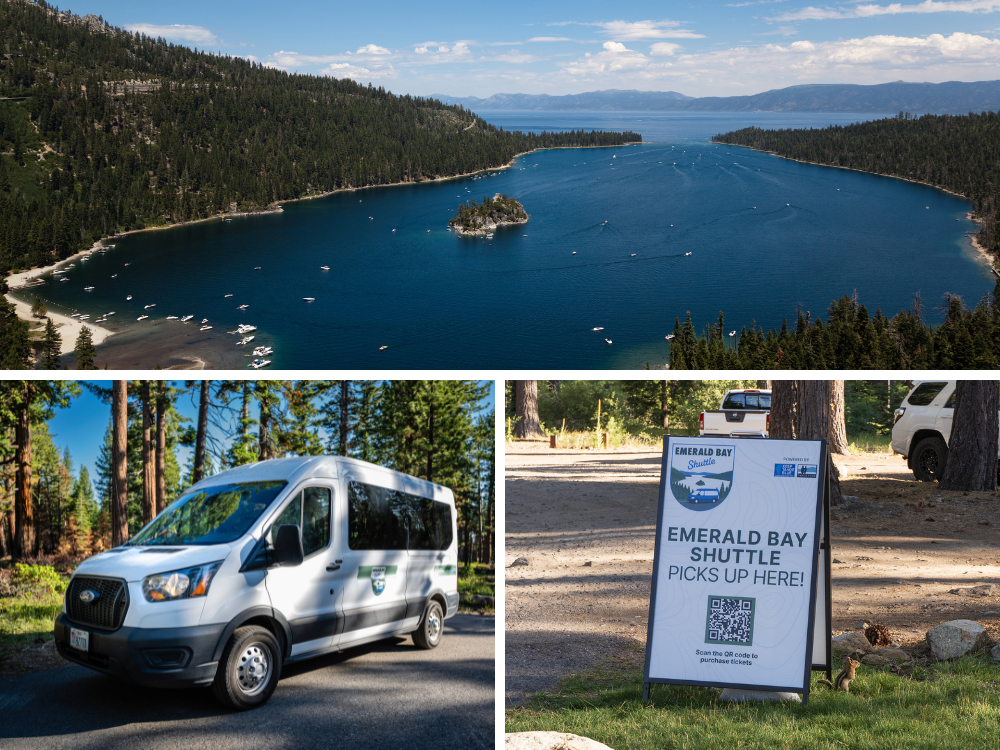
This summer, we launched a low-cost, convenient, and frequent shuttle service to Emerald Bay with a broad group of public and private partners. The shuttle operated in tandem with restrictions on illegal, unsafe, and environmentally harmful parking to alleviate traffic and the pollution it creates. The shuttle provided nearly 5,000 rides, operating seven days per week for 14 weeks with stops connecting Tahoe's south, west, and north shores. This pilot project provided data to develop solutions to longstanding environmental and safety issues in the area.
|
| Expand our Tahoe Blue Beach
program further |
In 2026, we will spread the Tahoe Blue Beach program's holistic management and stewardship model to more beaches, while seeking new partnership opportunities with concessionaires, land managers, businesses, and non-profits. |
Partner with business to engage even more visitors through our Blue Business program |
We work hand in hand with our business partners to multiply our impact in protecting Lake Tahoe now and for generations to come. In 2026, we will continue to prioritize partnering with hotels, restaurants, ski resorts, and outdoor recreation businesses, among others, to reach as many people as possible with stewardship education, opportunities, and incentives for Lake-friendly actions. |
|
|
|