Protecting Lake Tahoe requires constant vigilance. Invasive species, climate pressures, and development decisions threaten the Lake’s clarity and ecological balance. Through science-based advocacy and strong partnerships, Keep Tahoe Blue works year-round to stay ahead of these risks.
In this advocacy update, you’ll see how our team is advancing solutions, from preventing the spread of invasive golden mussels to securing federal funding for forest health and restoration.
Tahoe’s future is in your hands too. Your support is key to ensuring it remains bright. Your contributions create lasting change and help Keep Tahoe Blue protect this special place for many generations to come. |
|
|
Our Campaign WATER QUALITY & CLARITY |
|
|
Golden Mussel Prevention & Incentives
for Watercraft that Clean, Drain, and Dry |
What is it?
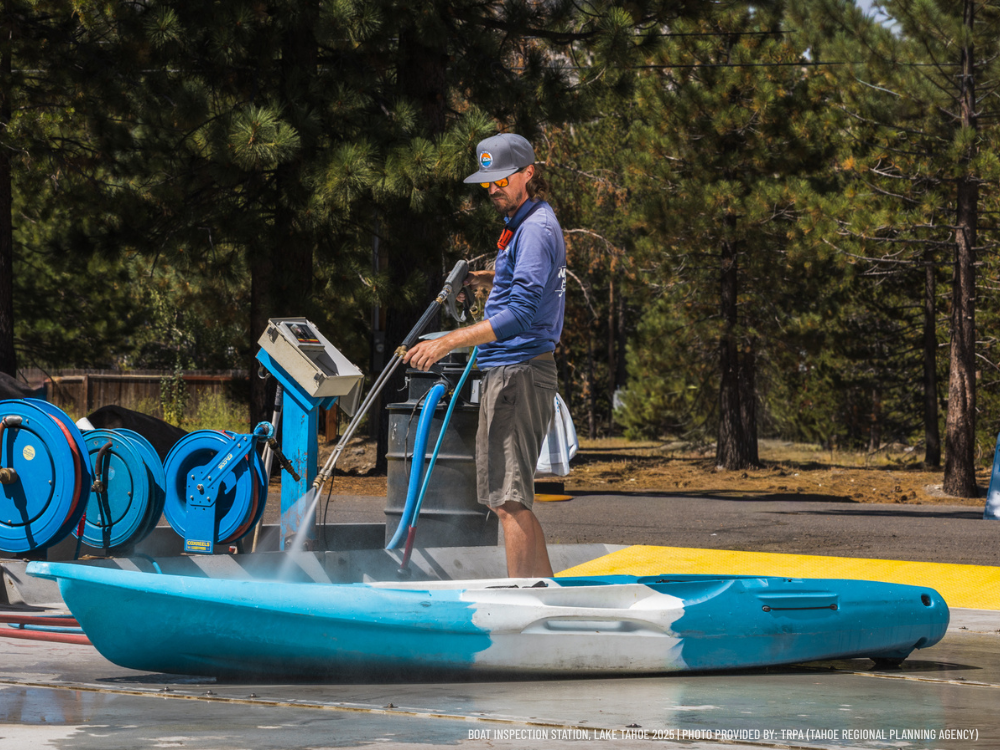
Invasive golden mussels are the most urgent threat to Lake Tahoe’s water clarity and quality. Everyone who uses the Lake must Clean, Drain, and Dry anything they plan to put in the water, from kayaks to water shoes.
Golden mussels are an invasive species of freshwater mollusks that have spread more than 350 miles of the state from Riverside County to Solano County since they were first discovered in California in October 2024. They’re small (typically less than 1.5” in length), fast-spreading, and nearly impossible to remove once a new population has been established. They encrust any hard surface in dense, sharp layers, which can cripple infrastructure like water pipes. As filter feeders, they concentrate nutrients in the water, which can fuel algae growth and make harmful algal blooms more likely. Golden mussels are also extremely hardy; they are able to withstand cold, nutrient-poor waters like Tahoe's, and can survive over a week without water of any kind.
If golden mussels enter Lake Tahoe, they will irreparably change the Lake’s ecology, water quality, beauty, and how we enjoy it. Where is it in the process?
Last year, Keep Tahoe Blue successfully advocated for the Tahoe Regional Planning Agency (TRPA) to strengthen its already stringent boat inspection and decontamination requirements to prevent invasive golden mussels from reaching Lake Tahoe. Beginning in the spring of 2025, decontamination became mandatory for all visiting boats, jet skis, and other motorized watercraft.
This spring, decontamination fees will be reduced by 50% for boats that arrive for inspection cleaned, drained, and dry. This will incentivize boaters to do their part to prevent the spread of invasive species, including the golden mussel.
At Keep Tahoe Blue’s urging, another requirement was introduced in 2025. eFoils and similar hand-launched electric watercraft must be inspected and receive a verification sticker at a boat inspection station at least once per calendar year, prior to launching in the waters of the Tahoe region.
Non-motorized water equipment, like paddleboards, fishing gear, and even water shoes, can also transport golden mussels. So in 2025, Keep Tahoe Blue launched a program, the Eyes on the Lake Outreach Team, where trained volunteers educate beachgoers about the golden mussel threat and encourage them to Clean, Drain, and Dry all equipment before it touches the water. Outreach Team volunteers interacted with over 900 beachgoers last summer. This program builds upon our Eyes on the Lake citizen science program, which has trained volunteers for over a decade to identify and report aquatic invasive species to prevent new infestations. We’re also working with partners to educate the public more broadly online, in print, and on TV.
Paddlers, anglers, and other beach users can have their water equipment decontaminated for free at any of Tahoe’s boat inspection stations.
What’s next? The stricter boat inspection requirements introduced in 2025 will continue with the new fee structure that rewards boaters who arrive with their watercraft cleaned, drained, and dry. Also continuing this year are the inspection requirements for hand-launched electric watercraft such as eFoils.
Keep Tahoe Blue is working with the California Legislature to strengthen golden mussel prevention throughout the state. Also, our Eyes on the Lake Outreach Team will grow to reach more people on more beaches this summer.
Collectively, these efforts strengthen protections against aquatic invasive species.
What’s Keep Tahoe Blue's position? SUPPORT Keep Tahoe Blue strongly supports swift, proactive steps to prevent the spread of golden mussels, especially those that empower boaters and Lake-goers to be part of the solution. Climate connection Warming air and water temperatures driven by climate change are creating more favorable conditions for aquatic invasive species to establish and spread in Lake Tahoe. More information: |
|
|
Our Campaign
CLIMATE RESILIENCE |
|
|
Santini-Burton Modernization Act |
What is it:
On January 27, Sen. Catherine Cortez Masto (D-NV) and Rep. Kevin Kiley (I-CA) introduced the Santini Burton Modernization Act (SBMA), a bill to free up millions of dollars in existing funds for the USDA Forest Service (USFS) to manage, protect, and enhance thousands of acres of public land in the Tahoe Basin. For more than five years, Keep Tahoe Blue’s policy professionals collaborated with lawmakers, local agencies, state and local governments, the Washoe Tribe of Nevada and California, and others — collectively known as Team Tahoe — to shape the legislation and reach this important milestone.
The new legislation builds on the 1980 Santini Burton Act, which appropriated funds to the USFS to purchase and manage sensitive Tahoe lands with revenue from public land sales in Southern Nevada. The intent was to protect those Tahoe parcels from development and instead manage them to protect the Lake’s water quality and improve public recreation access. Changes to the Santini-Burton Act in the 2000s inadvertently limited the law’s scope, so those funds could only be used to acquire lands, but not to manage them.
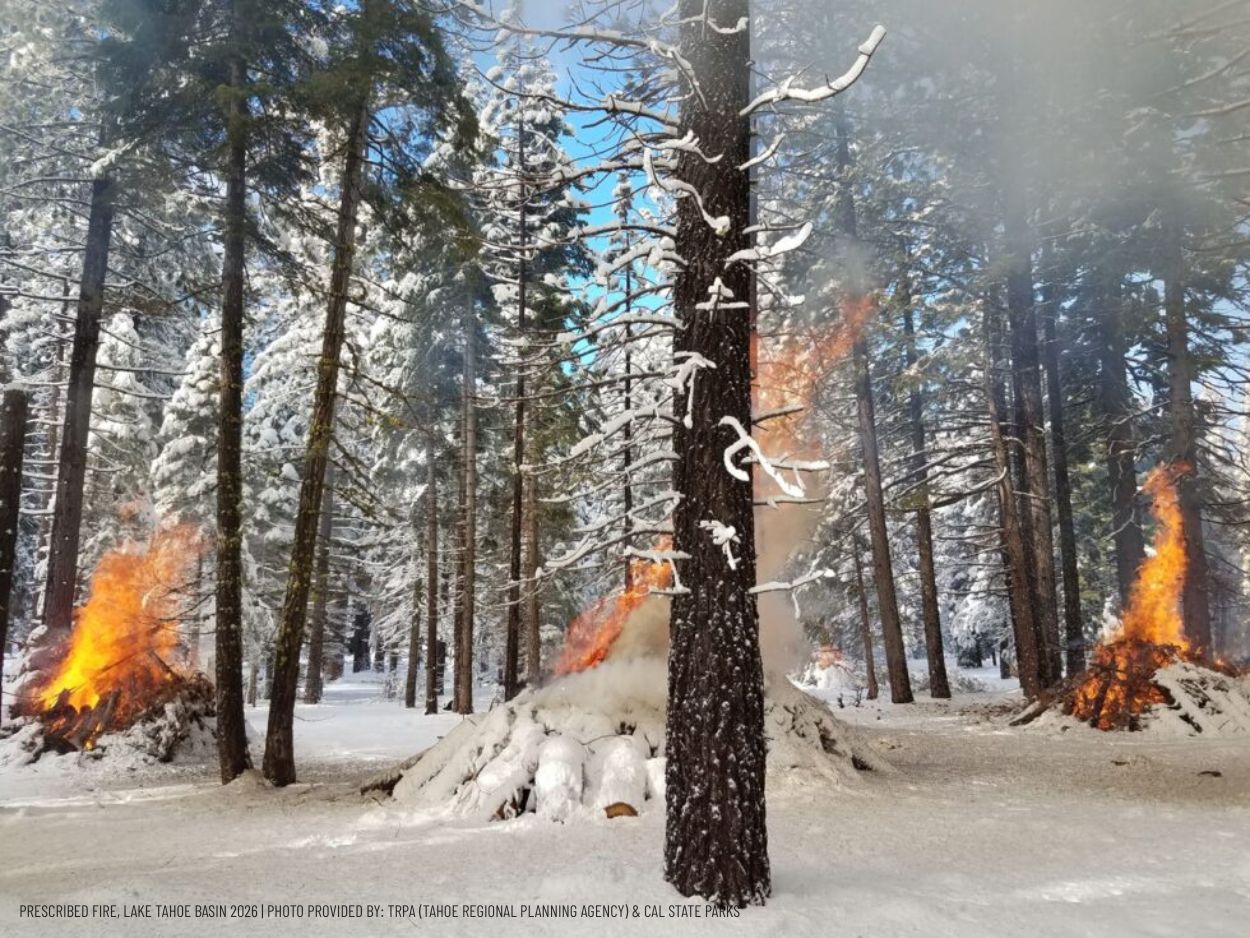
The newly introduced SBMA amends that change, so existing funds can be used for wildfire prevention, forest health projects, ecosystem restoration, and upgrades to bathrooms, paths, and other recreation infrastructure on 16,000 acres of public land. The SBMA would also expand the Washoe Tribe’s land ownership in the Tahoe Basin, their ancestral homelands. Crucially, these changes would come at no cost to taxpayers.
The heart of Keep Tahoe Blue’s advocacy is securing the resources needed to protect Tahoe, such as the funding and policy change that the SBMA represents. We put our decades-long relationships with lawmakers and civil servants to work in service of the Lake and our mission.
Where is it in the process:
Since Tahoe’s champions in Congress introduced the SBMA, the Senate Energy and Natural Resources subcommittee on Public Lands, Forests, and Mining held a hearing and received testimony from TRPA’s executive director. There is bipartisan support for SBMA, including Sens. Cortez Masto, Rosen, Padilla, Schiff, Rep. Kiley, and others.
What’s next:
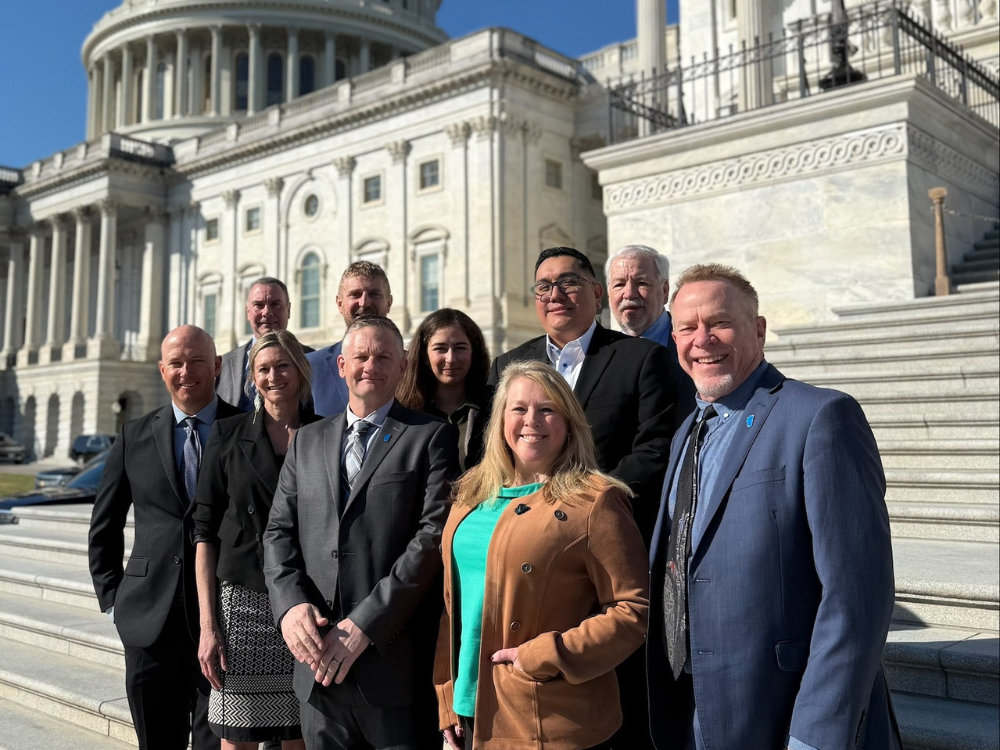
Keep Tahoe Blue and other representatives from Team Tahoe are traveling to Washington, D.C. in the coming days to continue building support for the SBMA, alongside making our 2027 Lake Tahoe Restoration Act funding requests. Read more about our federal advocacy in the next section. What’s Keep Tahoe Blue's position? SUPPORT
The 16,000 acres of public land in question protect Lake Tahoe’s water quality and clarity, while also offering world-class recreation opportunities for all. However, those benefits are only delivered with ongoing management by the USFS. The SBMA once again makes that possible, along with new Environmental Improvement Program projects, without adding any new costs to taxpayers. It is also a transformative opportunity for the Washoe Tribe to fund their own environmental projects and have a broader and permanent presence on their ancestral homelands in Tahoe.
Climate connection:
Ongoing management of lands acquired through the 1980 Santini Burton Act has made, and will continue to make, Lake Tahoe’s delicate ecosystems better able to withstand the impacts of climate change — including extreme wildfire and drought — through forest management work and revitalization of ecosystems and their functions.
More information: |
|
|
Our Campaign CONSERVATION ACROSS BORDERS |
|
|
Chile & Tahoe: Partners in Lake Protection |
What is it:
Our work has taught us that the challenges facing Lake Tahoe are not unique. Around the world, iconic freshwater ecosystems are facing similar pressures from development, tourism, and climate change. Since 2018, Keep Tahoe Blue has partnered with Chilean conservationists working to protect 23 lakes in Northern Patagonia. Like Tahoe, these beautiful lakes attract people seeking a closer connection to nature. They are also threatened by development, agriculture, and industry in ways that Tahoe experienced decades ago.
Together with the Tahoe Regional Planning Agency and the UC Davis Tahoe Environmental Research Center, Keep Tahoe Blue is sharing lessons from our nearly 70 years of conservation successes and setbacks. Our goal is to help the Northern Patagonian lakes avoid impacts — such as building over marshes and meadows — that Tahoe is still working to undo today. In return, our partners in Chile are sharing lessons that we can apply at home, including technology that collects real-time information on lake health, and how working with unlikely partners, such as corporations, can accelerate conservation efforts when sustainability is a shared value.
Where is it in the process:
Shortly after we began working with our conservation partners in Chile, they created an environmental nonprofit in the image of Keep Tahoe Blue called Chile Lagos Limpios (Chile Clean Lakes). Fernando “Nano” Coz, the organization’s CEO, recently visited the United States. In addition to speaking to groups around Tahoe, Nano and Keep Tahoe Blue’s Chief Strategy Officer Jesse Patterson gave a talk at Manny’s, a well-known public forum in San Francisco, moderated by Alejandro Lazo of CalMatters.
What’s next:
As Keep Tahoe Blue pursues the goals in our 2025–2029 Strategic Plan, we will incorporate lessons learned from Chile Lagos Limpios while continuing to share our experiences as part of our campaign Conservation Across Borders. What’s Keep Tahoe Blue's position? SUPPORT To outpace the evolving challenges facing Tahoe, we are looking beyond the Basin for solutions, including in Chile. Climate connection:
Chile’s Northern Patagonia region has a Mediterranean climate very similar to Tahoe’s. Both places must be prepared to withstand extreme drought, wildfire danger, and erratic weather that will become common with climate change. More information: |
|
|
Government Affairs at the State & Federal Level |
What is it?
Keep Tahoe Blue’s policy and government affairs professionals work year-round with lawmakers to secure funding for Tahoe and develop legislation that supports our region’s environmental goals. Several times each year, our team travels to Washington, D.C., Sacramento, and Carson City alongside our Tahoe advocacy partners to strengthen the collaboration with our legislative champions and advance our shared priorities for Lake Tahoe.
This month, our CEO Darcie Goodman Collins, PhD, and Government Affairs Manager Noa Banayan will meet with legislators and agency staff in Sacramento and our nation’s capital. While Nevada’s legislature does not reconvene until 2027 due to its biennial schedule, our team continues to stay engaged through meetings of a legislative oversight committee focused on Lake Tahoe.
Where is it in the process:
In Washington, D.C., our goal is to secure broad support for the Santini-Burton Modernization Act, which you can read about in a preceding section of this newsletter. Darcie and Noa will be joined on the trip by other members of Team Tahoe. Together with Tahoe’s delegation of lawmakers, they are a powerful advocacy force that has scored significant wins for the Basin, including passage of laws like the Lake Tahoe Restoration Acts (LTRA) that have secured $715 million in federal funds for Environmental Improvement Program projects. This spring, Team Tahoe will lay the groundwork for fiscal year 2027 LTRA funding by meeting with our delegation in Congress and federal agencies that would implement projects funded by the LTRA.
Our focus on the state-level in California includes: - Improving water infrastructure for fire suppression, such as adding fire hydrants and replacing aging pipes with more durable, higher flow lines.
-
Accelerating safety improvements in the Emerald Bay transportation corridor.
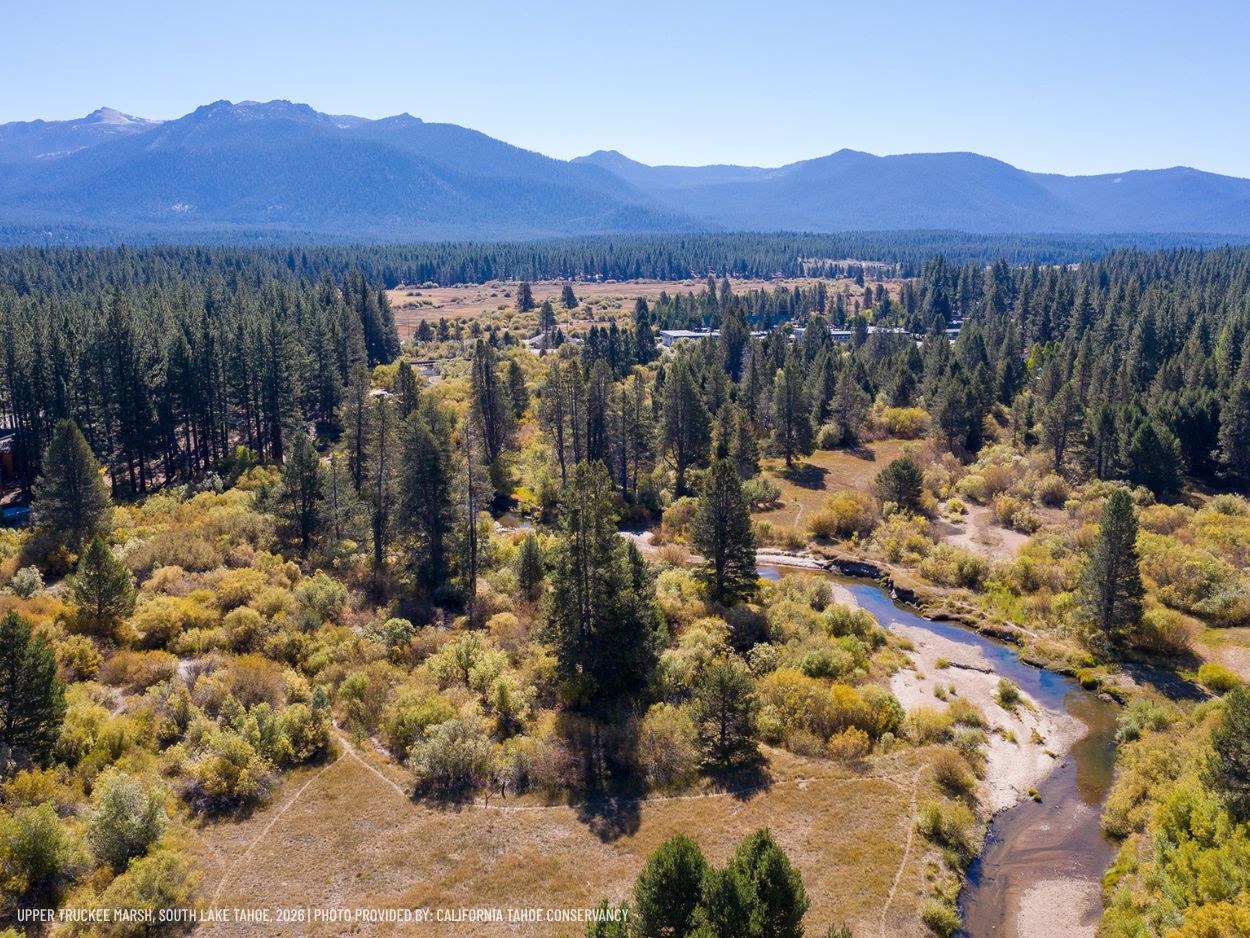
- Securing funds to support restoration of 30 acres of river, marsh, and meadow in South Lake Tahoe, now known as the Upper Truckee Marsh South project.
- Articulating actions the legislature can take to strengthen golden mussel prevention, including standardizing guidelines for decontaminating watercraft, with more stringent requirements for Lake Tahoe.
Keep Tahoe Blue, together with our advocacy partners from the California Tahoe Alliance, will request funding for several of these priorities through Proposition 4, a 2024 voter-approved bond measure that provides dollars for state and local parks, environmental protection projects, water infrastructure projects, energy projects, and flood protection projects. What’s next:
After traveling to Washington, D.C. and Sacramento this month, Keep Tahoe Blue will continue working with lawmakers and staffers throughout the year to win support for Tahoe’s legislative priorities.
What’s Keep Tahoe Blue's position? SUPPORT
To fulfill our mission, our team reaches out beyond the Basin for support. Decision-makers at the local, state, and federal levels all play a crucial part in ensuring Tahoe stays healthy and beautiful for future generations.
Climate connection:
Climate change intensifies threats to Tahoe, including pollution, fire, and drought. Effective conservation requires strong policy, cutting-edge science, and resources to stay one step ahead of those threats.
More information: |
|
|
Our Campaign
SUSTAINABLE RECREATION, TRANSPORTATION & DEVELOPMENT |
| |
TRPA Environmental Threshold Updates |
What is it:
The Tahoe Regional Planning Agency’s (TRPA) Environmental Threshold Carrying Capacities ("Thresholds") are science-based environmental goals and standards that guide how Lake Tahoe is managed. First adopted in 1982, they help determine how much development the Basin can support and where ecosystem restoration is needed most. In other words, Thresholds allow anyone to track how well the region is doing at safeguarding Tahoe’s air, water, forests, wildlife, and the ability for people to enjoy this special place sustainably.
Several of the Thresholds have not been updated since they were first established in the 1980s and do not reflect today’s scientific understanding of Tahoe’s ecology or the emerging threats facing the Basin, particularly the impacts of climate change. For the Thresholds to be effective in protecting Tahoe for future generations, they must be updated to reflect current science and conditions. Where is it in the process: In February, with Keep Tahoe Blue’s support, TRPA’s Governing Board adopted updated Vegetation Preservation / Forest Health Threshold Carrying Capacities to better incorporate the best available science.
What’s next:
Now that this Threshold has been adopted, Keep Tahoe Blue will work with TRPA to implement the updated standards and ensure they translate into actionable management and regulatory decisions — including evaluating development proposals based on how they contribute to achieving thresholds, and more enforcement when rules are violated.
The recent Threshold update represents real progress, and we commend TRPA for their work. Keep Tahoe Blue will continue urging TRPA to complete updates for remaining Thresholds before the next Threshold Evaluation Report in 2027.
What’s Keep Tahoe Blue's position? SUPPORT
Keep Tahoe Blue has supported the proposed restructuring and updates of Environmental Threshold Carrying Capacities for years. We particularly stressed that updated Thresholds must be measurable, outcome-based, and decision-relevant, so they can serve their true function in protecting and improving Tahoe’s environment and people’s enjoyment of it.
Climate connection: Updating Thresholds is a climate adaptation necessity as the current versions rely on assumptions that do not hold under increased wildfire risk, prolonged drought, and more extreme weather events. More information: |
|
|
Potential Plastic Litter Reduction Ordinance in Eastern Placer County |
What is it: Placer County is considering banning the sale and distribution of some single-use plastic products in the eastern portion of the county to advance its sustainability goals. An ordinance could come into effect in 2027.
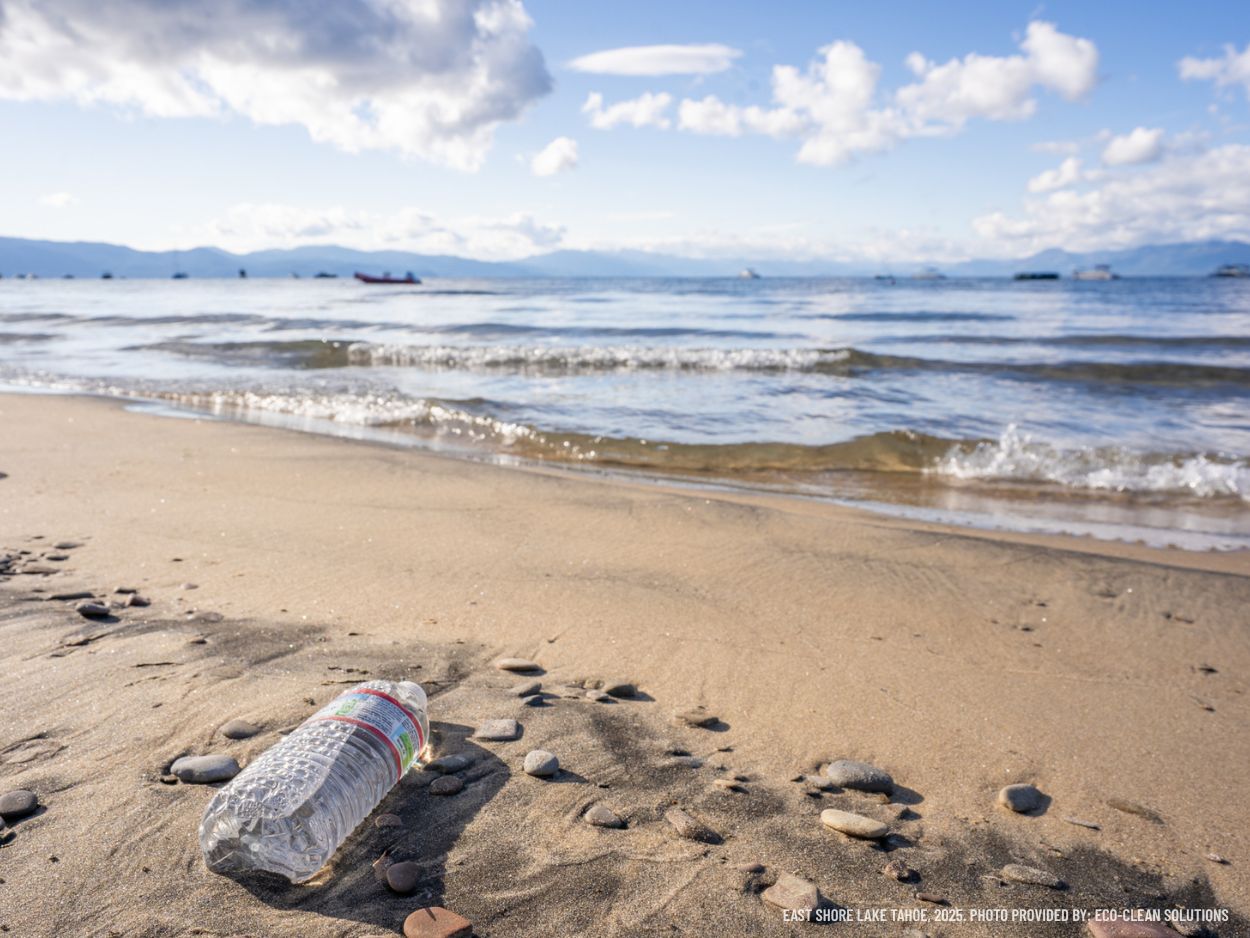
Based on data collected at more than 2,800 Keep Tahoe Blue litter cleanups over 12 years, plastics are among the top three trash items found on Tahoe’s beaches every year. Once in the environment, these items last forever, breaking down into smaller pieces that can eventually become microplastic pollution in the Lake. Our data shows that reducing plastic litter at its source is far more effective than removing it from Tahoe’s sensitive environment after the fact.
In response to these findings, Keep Tahoe Blue deployed our Science to Solutions model and successfully advocated for local ordinances that reduce plastic litter by prohibiting the sale of plastic bags, polystyrene, and single-use plastic water bottles, and by making plastic utensils, straws, and other foodware items available only by request. Litter-stopping ordinances are in place in the City of South Lake Tahoe and the Town of Truckee. Not only do these ordinances reduce litter and waste, but they help educate the public on the environmental impacts of plastic pollution and highlight cheaper or free alternatives, like drinking Tahoe Tap water instead of buying bottles.
Placer County is now considering a similar set of rules for the Tahoe portion of the county. This would create more consistency throughout the Tahoe region for businesses and consumers, so the problem is addressed, not displaced.
Where is it in the process: Together with Placer County staff and volunteers, Keep Tahoe Blue surveyed 60 businesses in Eastern Placer County that could be affected by the ordinance. More than 75% of businesses were supportive of the proposed rule change.
Those findings were shared at a Placer County Board of Supervisors meeting on February 3. The Board gave feedback and direction to county staff to draft an ordinance with three key components: prohibiting the sale and distribution of single-use water bottles containing plastic, doing the same for polystyrene (Styrofoam) products, and only providing single-use plastic foodware on request.
The Board was not unanimously in favor, but thanks to leadership from Tahoe representative Supervisor Gustafson, county staff will draft an ordinance for detailed discussion at a future Board meeting. What’s next: An implementation-ready ordinance will be considered for the first time at a Board of Supervisors meeting held in Tahoe in May. Keep Tahoe Blue will continue to reach out to local businesses and community members to identify concerns about the ordinance that can be addressed and to ask them to voice their support. If approved, the ordinance would go into effect on Earth Day 2027. What’s Keep Tahoe Blue's position? SUPPORT
While volunteer litter cleanups remove trash from the Tahoe environment, they are not a sustainable, long-term solution. However, the litter data gathered through those efforts provides compelling evidence that Keep Tahoe Blue uses to support policies that stop litter at the source.
Climate connection:
Single-use plastics are derived from fossil fuels, generating greenhouse gas emissions throughout their lifecycle. From extraction and transportation to incineration or landfilling, plastic leaves a large carbon footprint at every step, which is felt in Tahoe and worldwide.
More information: |
|
|
39 North
39 North is a very large hotel and townhome project planned for the heart of Kings Beach, which includes an achievable workforce housing component on a nearby parcel. Keep Tahoe Blue has been tracking the project since 2023 and working with the developers and Placer County to address concerns about the project’s scale. It was originally a much larger proposal, but the current plan has been scaled down and now meets Placer County's Tahoe Basin Area Plan requirements, except for one exceedance of building length. The proposal will begin a public review and comment process in late summer or fall of 2026.
Tahoe Keys Marina Redevelopment
In 2021, Suntex Marinas acquired the Tahoe Keys Marina and has begun a multi‑year effort to modernize the aging facility and add clean boating infrastructure. Keep Tahoe Blue has been working closely with Suntex since the purchase to ensure their operations, along with in-water and upland development plans, improve water quality, safety, and the visitor experience. The first phase, which began last year, has focused on in‑water improvements with full replacement of old, deteriorating docks. The future upland redevelopment plan would remove outdated buildings and reconfigure the site, including relocating the boat ramp. Suntex aims to begin upland construction as early as 2027 following an extended permitting process, reflecting the scale of the project and the importance of careful environmental review in the Tahoe Basin.
|
|
|
Tabling at the Toyota US Mogul Freestyle Championships March 28-29, 2026 Palisades Tahoe Resort Come out to this skiing event at Palisades Tahoe to visit with our team and learn more about Keep Tahoe Blue's lake-saving work. |
| |
|
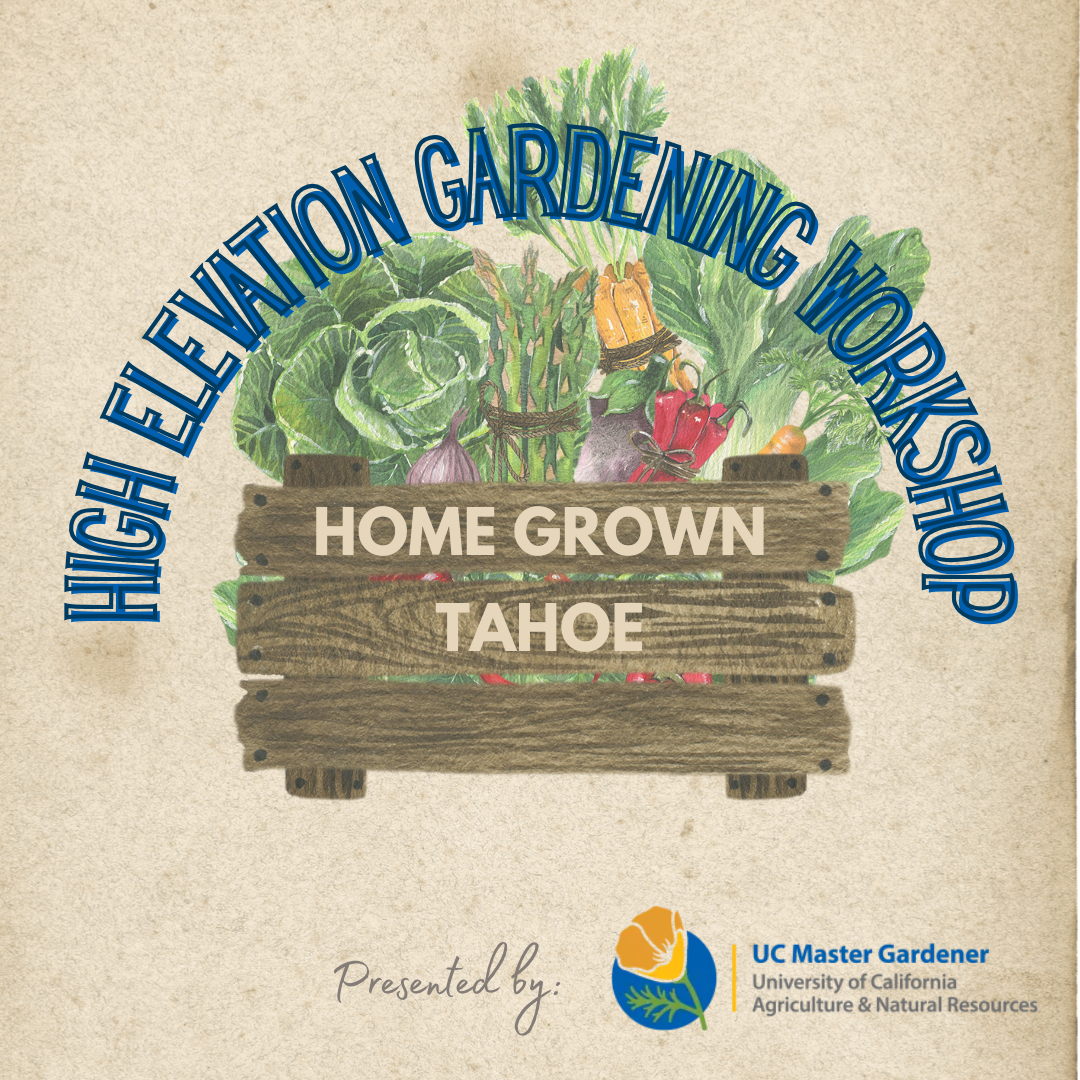
Master Gardeners Workshop – High Elevation Edible Gardening 101 March 28, 2026 Spurlock/Evers Environment & Education Center Join the UC Master Gardeners of Lake Tahoe for an intensive, 90-minute workshop designed to give you the blueprint for a successful high elevation harvest in your garden. |
| |
|
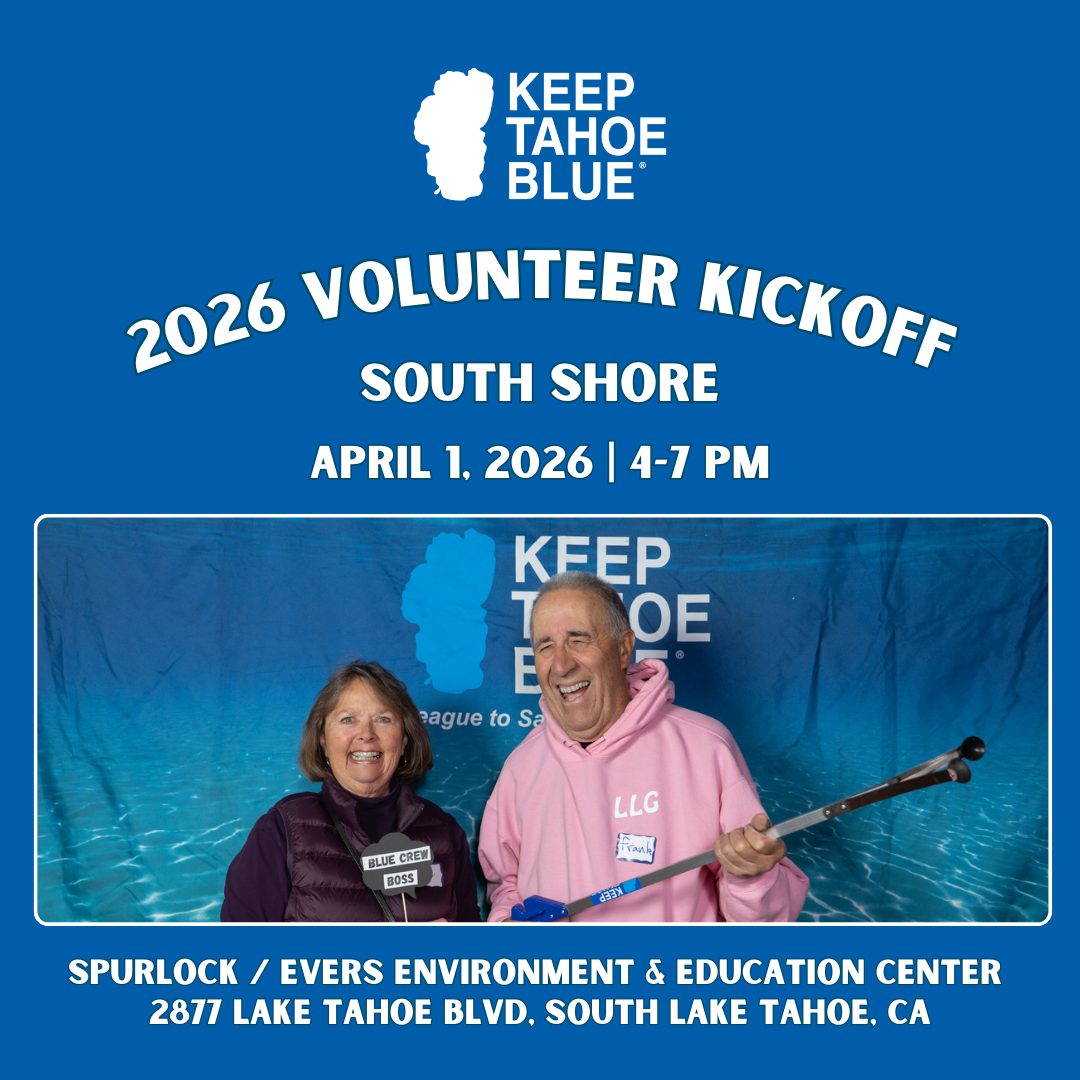
South Shore Volunteer Kickoff April 1, 2026 Spurlock/Evers Environment & Education Center
Come on out for a free, open house-style event to welcome new and returning volunteers into the Keep Tahoe Blue community and share the many ways you can get involved this year. |
| |
|
Tahoe Wildflower Big Year Celebration April 2, 2026 Spurlock/Evers Environment & Education Center Gather to celebrate the accomplishments of the Tahoe Wildflower Big Year community, reflect on a year of exploration and learning, and look ahead to future seasons of discovery at this mixer-style event. |
| |
|
North Shore Volunteer Kickoff April 7, 2026 Alibi Ale Works, Incline Village Come on out for a free, open house-style event to welcome new and returning volunteers into the Keep Tahoe Blue community and share the many ways you can get involved this year. |
| |
|
South Tahoe Earth Day Festival April 18, 2026 Lake Tahoe Community College Celebrate Earth Day by joining us at this South Lake Tahoe community event! |
| |
|
|